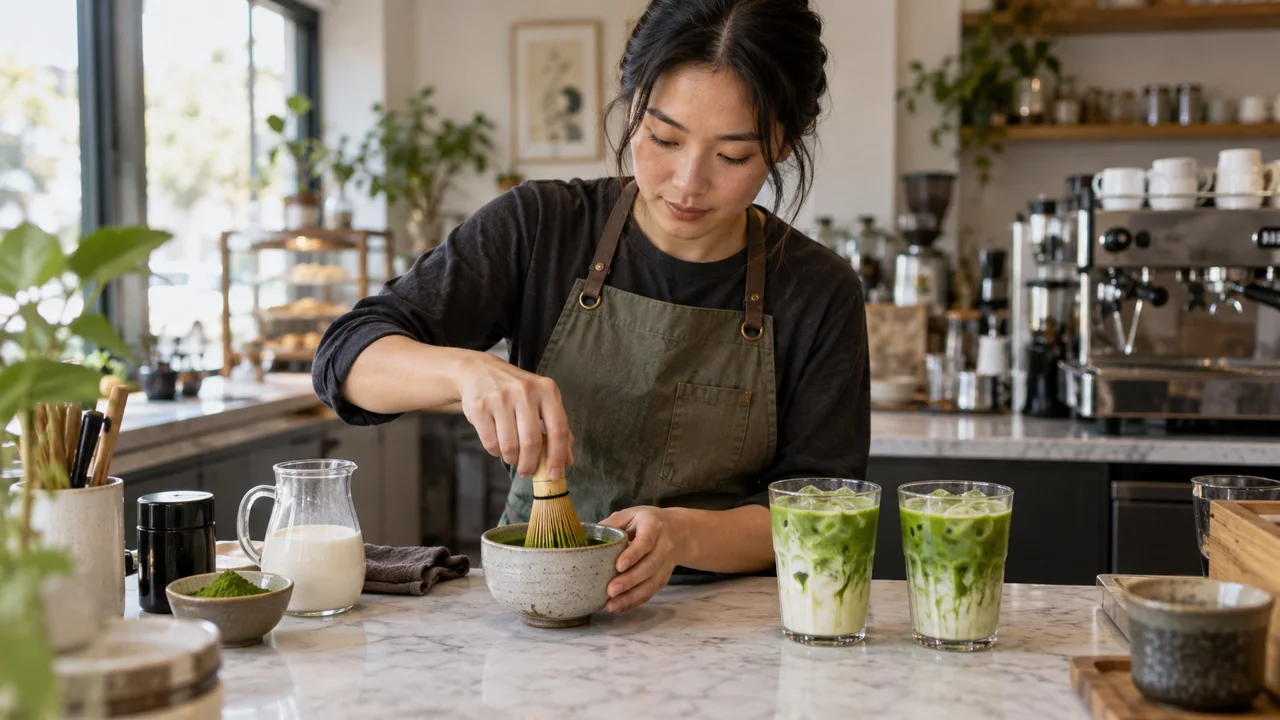
The cafe down the street posts an iced strawberry matcha. The photo gets attention. A supplier sends you a price list. By lunchtime, adding matcha feels less like a decision and more like catching up.
Pause before ordering a shelf full of ingredients.
A popular category can still be the wrong addition to your cafe. The useful question is whether a drink earns its place in your menu, your workflow and your customers' routine.
The growth is real in the dataset, not guaranteed in your shop
Square's November 2025 US newsroom report said matcha orders increased 36.5% year on year in Q3 2025 within its reported seller data. That is a historical platform result, not the growth rate for Australian cafes or evidence that your next matcha launch will succeed.
Use it to justify a small test, not a large stock commitment. Your neighbourhood, price point and existing customers may tell a different story.
Start with one drink your team can reproduce
Choose a simple product definition: recipe, serving size, milk choices, sweetness and preparation method. Cost the drink customers will actually order, including the cup and any extra ingredient options.
If you cannot make three consistent servings during an ordinary shift, the launch needs more preparation. A beautiful sample made by the owner is not yet a workable menu item.
Limit the opening range. One tested recipe can reveal whether there is demand. Several syrups, toppings and sizes make it harder to tell whether the base product works and easier to accumulate slow-moving stock.
Describe the flavour honestly. Do not borrow health claims from a trend report or treat a supplier's marketing copy as evidence for medical benefits. Sell the drink you can make well.
Compare contribution, not selling price
The following numbers are illustrative A$ amounts, excluding tax. Assume the listed variable cost includes ingredients, packaging, transaction allocation and genuinely incremental preparation labour.
| Drink | Selling price | Listed variable cost | Contribution before shared overhead |
|---|---|---|---|
| Existing iced latte | $6.00 | $2.10 | $3.90 |
| Trial matcha drink | $7.50 | $3.20 | $4.30 |
The matcha leaves A$0.40 more than the latte under those assumptions. It does not leave A$1.50 more simply because the selling price is higher.
Now imagine selling 80 matchas in a trial. Suppose your working estimate is that 40 replaced iced lattes and 40 were additional drink purchases. The incremental contribution would be:
40 × A$0.40 + 40 × A$4.30 = A$188.
Against A$140 of one-off trial costs, that leaves A$48 before any other additional costs. If all 80 simply replaced lattes, the uplift would be only A$32 before those trial costs. The sales count alone cannot settle the decision.
You may not know exactly what customers would otherwise have ordered. Keep that split as an assumption and test several scenarios instead of presenting it as measured fact.
Watch the queue as closely as the cup
Time a few preparations during a realistic service period. Record remakes and where the new drink competes with existing work: blender, sink, bench space, milk station or payment handover.
If it takes extra time, ask whether you have spare capacity then. An extra minute at 2 pm is a different operational decision from an extra minute with a queue at 8:15 am.
Do not assume that a more profitable individual drink improves the shift if it prevents the team from completing other orders. Include observed disruption in your review, without inventing a cash value for every second.
Treat the second purchase as the useful signal
A launch photo can generate curiosity. Your next question is whether people choose the drink again once the novelty passes.
Record the launch date, units sold, waste, remakes and the wider drink mix over a complete trading cycle. Where you can identify repeat purchases legitimately, compare them over the same follow-up window. Otherwise, keep a manual count of volunteered feedback and avoid pretending it is a retention metric.
Set your decision before the trial ends. Keep the drink if the economics and workflow work. Adjust it if one clear issue is fixable. Stop if the product needs constant promotion, produces avoidable waste or does not suit your service.
You do not owe a trend permanent space on the menu.
Your next menu decision can be smaller
Order only what a realistic trial can use. Photograph the real drink, explain it clearly and give staff a consistent recipe. Then decide with your own evidence, not somebody else's queue.
Launch the tested drink under your own brand
Once the drink earns its place, use genuine photos and a clear menu description to introduce it. Customers who have your BizAppMaker app and have opted in can receive a push message or a coupon about the new drink. Explore BizAppMaker’s app and customer marketing features. A relevant invitation to existing customers can support the trial; it cannot turn an unprofitable recipe into a profitable one.
See what a branded app looks like for cafes, or try the live app demo.