The advertising invoice says A$180. You know exactly what it cost.
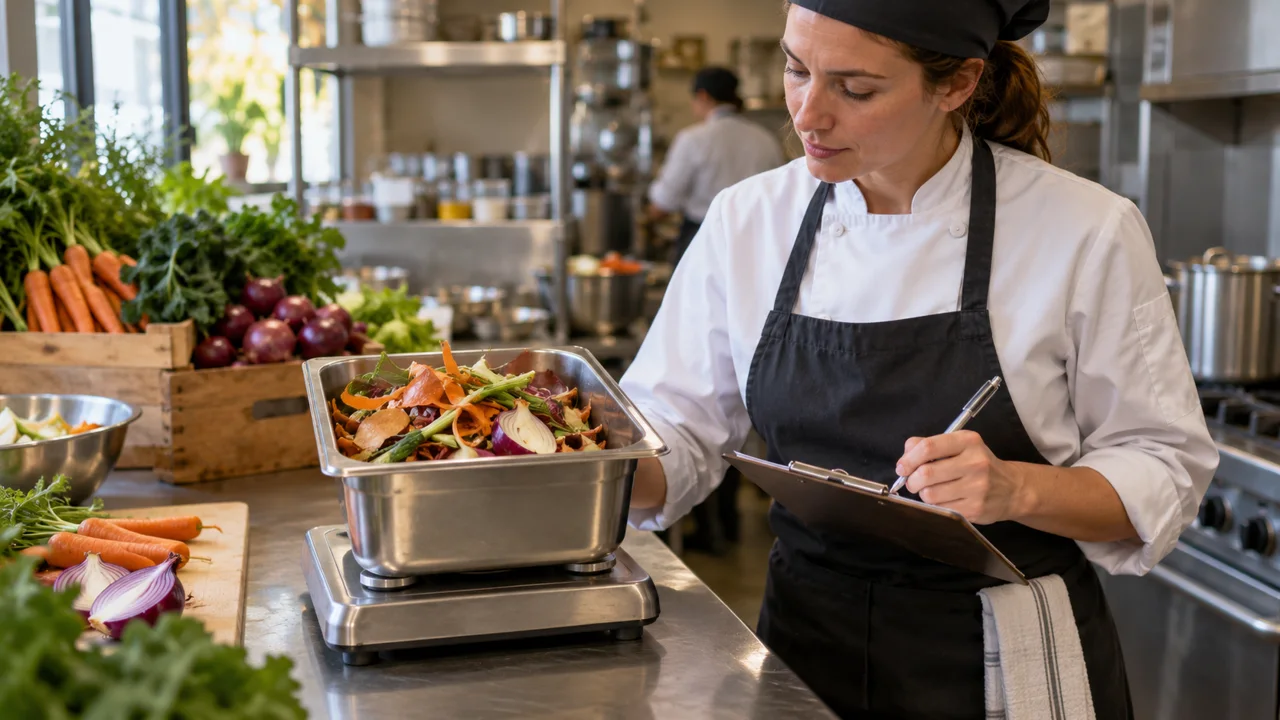
The bin contains yesterday's salad prep, several pastries and food returned on plates. That number is harder to see.
Before spending to bring in more orders, spend one week finding out which costs are leaving through the back door. This is not an argument against marketing. It is a way to stop asking new sales to compensate for a preventable operating problem.
A real venue example, not a universal savings target
End Food Waste Australia reports that Sydney's Opera Bar reduced food waste by one-third through improvements in measurement and kitchen practice. That is a specific programme case, not a promise that your venue can remove one-third of its food bill.
Your first goal is to establish your own baseline. You cannot choose a useful fix until you know what is being wasted and why.
Give the waste a reason, not just a weight
For a short trial, use a simple record with the item, approximate quantity, time and reason. Integrate it into your existing safe handling and disposal process rather than disrupting service or asking staff to recover food from bins.
Separate at least these categories:
| Category | The question it helps answer |
|---|---|
| Prep waste | Are recipe yield or preparation practices different from the costing assumption? |
| Spoilage | Was too much ordered, stored incorrectly or not rotated in time? |
| Prepared but unsold | Did production exceed demand for that trading period? |
| Plate returns | Are portions or components repeatedly being left? |
Not every category represents preventable loss. Some trimming is unavoidable. A customer leaving food does not automatically mean the portion is wrong. Record the observation before deciding the cause.
Avoid using the exercise to single out employees. Ask what made waste likely: a poor forecast, inconsistent recipe, unclear handover or stock that arrived in a larger pack than the menu could use.
Cost ingredients, not imaginary sales
Suppose you discard 12 unsold pastries that cost A$2.20 each and 3 kilograms of prepared produce costed at A$6 per kilogram.
The listed ingredient cost is:
12 × A$2.20 + 3 × A$6 = A$44.40.
If the same avoidable pattern occurs on five comparable days, that is A$222 of ingredient cost. This is an illustrative calculation, not a forecast, and excludes tax and any separate labour or disposal costs.
Do not value each pastry at its menu price and call that amount recoverable profit. A pastry that did not sell does not prove a customer would have bought it. The sales opportunity and the ingredient expense are different questions.
Only extend a daily result across a month when the trading pattern supports it. A wet Monday should not become an annual forecast without evidence.
Choose the cause before the solution
If prepared food is left every afternoon, test a smaller first batch with a planned review point. If one ingredient spoils before use, examine pack size, ordering rhythm and its actual use across the menu. If one garnish returns untouched, investigate whether it improves the dish enough to justify its cost.
These are proposed experiments, not universal prescriptions. Run the smallest change that can answer the question, and keep the recipe's quality and your food-safety requirements intact.
Do not start by extending use-by dates, repurposing unsafe food or serving items you would otherwise discard for safety reasons. A waste reduction target never overrides safe food handling. Use your food-safety lead and applicable local guidance when changing storage, preparation or reuse procedures.
Watch the other side of the experiment
Preparing less can reduce waste and also create stockouts. You need both numbers.
For the item you change, record portions prepared, sold, discarded and unavailable requests where observable. Add customer complaints and any extra labour caused by small batches.
Imagine reducing production saves A$20 in ingredients but regularly prevents A$35 of contribution from completed orders. That would not be an improvement under those assumptions. Equally, a small sell-out near closing may be an intentional menu decision. Decide based on the pattern, not a rule that everything must stay available until the last minute.
Keep the review short enough that it actually happens. One line beside the production sheet is more useful than an elaborate dashboard nobody updates.
Finish the week with one decision
At the end of the trial, select the largest credible avoidable cost with a feasible fix. Assign a person, an action and a review period. Keep monitoring long enough to include quiet and busy services rather than declaring victory after one good day.
The best result is not a photograph of an empty bin. It is less avoidable cost without shifting the problem into food quality, safety or missed orders.
A five-line waste log
- Date and service.
- Item and quantity discarded.
- Reason: prep, spoilage, overproduction or plate return.
- Ingredient-cost estimate and its basis.
- One feasible prevention action and the person responsible.
Record waste after separating it from food for service. Do not return discarded food to production.
Promote a menu the kitchen can deliver
A more reliable menu is a stronger starting point for your own ordering channel. Explore BizAppMaker’s features and discuss how to present your menu. Keep availability accurate as service changes. Waste weighing, recipe costing and stock control remain part of your kitchen process; this article does not claim an inventory or waste-management integration.
Explore the app for restaurants, or try the live app demo.